



A Brief History of Coffee Shops and the First Coffeehouse
The history of coffee shops didn’t begin with espresso machines, pastry cases, or people working on laptops.
Long before the modern café appeared, coffeehouses were places where people gathered to talk, hear news, play games, and spend time outside the home.
Finding the very first coffeehouse, however, isn’t as simple as attaching one name to one building. Coffee’s public culture developed in the Islamic world before the best-known coffeehouses opened in Europe.
Because early records are incomplete, it’s more accurate to talk about the earliest documented coffeehouses than to declare one shop the first of its kind.
So, where was the first coffeehouse?
Coffee was being consumed in Yemen by the fifteenth century, and merchants helped spread the drink through Islamic regions and empires. By the sixteenth century, coffeehouses had become recognizable social spaces in Ottoman cities.
The first well-documented coffeehouses in Istanbul are generally dated to around 1554 or 1555. Ottoman chronicler İbrahim Peçevi wrote that merchants from Aleppo and Damascus opened coffeehouses in the city during the reign of Sultan Süleyman I.
That doesn’t mean coffee wasn’t served publicly before then. It simply means Istanbul’s coffeehouses are among the earliest ones clearly documented in written records.
Early coffeehouses weren’t quiet cafés
An early Ottoman coffeehouse probably wouldn’t feel much like a modern shop built around takeaway cups and Wi-Fi. These were active social spaces where patrons could drink coffee, talk, listen to music or storytellers, play board games, hear poetry, and exchange news.
They also weren’t open and equal community spaces in the modern sense. Patrons were usually men, and access depended on the city, time period, and local customs. Still, coffeehouses created a new kind of gathering place outside the home, mosque, market, or workplace.
Coffeehouses weren’t always welcomed by those in power. Officials weren’t only concerned about coffee itself. They were also wary of the conversations happening over each cup.
People gathered to share news, discuss public issues, and sometimes criticize their leaders. Authorities tried to restrict or close coffeehouses, but the culture continued to grow.
How coffeehouses reached England
Coffee and coffeehouse culture traveled through merchants, diplomats, scholars, and expanding trade routes. England’s first coffeehouse is generally dated to 1651 in Oxford. London’s first followed in 1652, when Pasqua Rosée opened a small coffeehouse near St. Michael’s Church in Cornhill.
Londoners quickly took to the idea. Coffeehouses offered drinks, conversation, printed news, and a place to meet people connected to a particular line of work or interest.
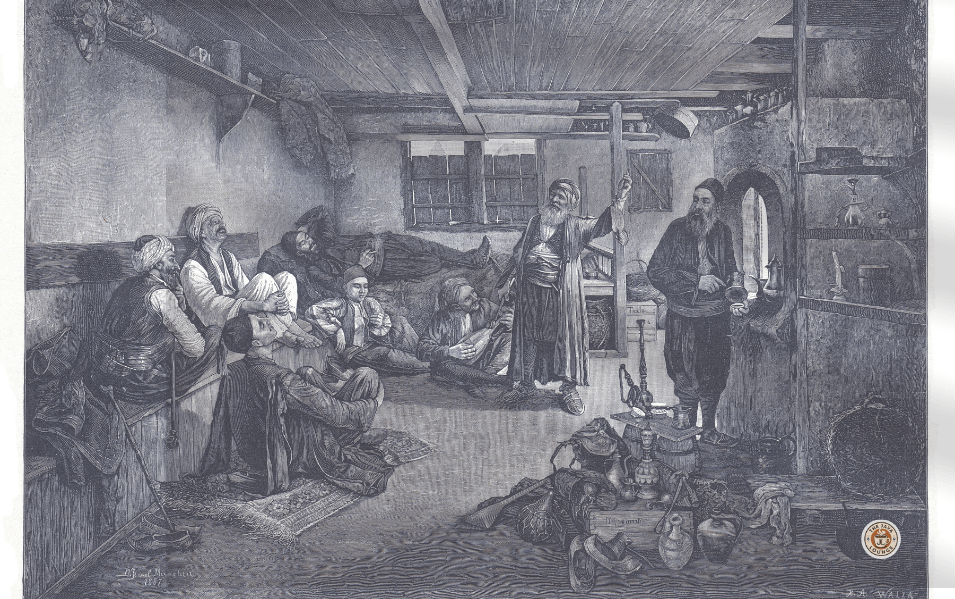
Some became known for writers, merchants, politicians, scientists, shipowners, or financial traders. By 1663, more than 80 coffeehouses were operating within the old walls of the City of London.
This period is often remembered as a golden age of lively conversation, but the reality was more complicated. English coffeehouses brought together people from different backgrounds, but they weren’t open to everyone.
Women were usually excluded as customers.
When coffeehouses became business hubs
Some London coffeehouses became closely tied to commerce because regular customers returned to the same rooms to exchange specialized information.
Edward Lloyd’s coffeehouse attracted ship captains, merchants, and shipowners who needed reliable shipping news.
The gathering place eventually gave its name to the Lloyd’s insurance market.
At Jonathan’s Coffee House, lists of stock, currency, and commodity prices were posted for traders. The London Stock Exchange traces part of its history to that activity.
The growth of European coffee culture also had a much less cozy side.
Rising demand became connected to colonial trade and plantation systems, including enslaved labor.
A complete history of coffee shops has to include both the lively public rooms and the unequal systems that supplied them.
From the coffeehouse to the European café
Coffee-drinking spaces developed differently from city to city.
Paris became known for cafés that mixed coffee with food, literature, theater, and political discussion. Café Procope, established in 1686, became one of the city’s best-known intellectual gathering places.
Vienna developed its own coffeehouse tradition, with table service, newspapers, pastries, and customers who could linger for hours.
In other cities, coffee was served in inns, restaurants, hotels, confectioners, and dedicated coffee rooms.
The words coffeehouse, coffee shop, and café eventually began to overlap, but they didn’t always describe exactly the same kind of place.
Each city adapted the basic idea to suit its own habits.
Espresso changed the pace
The development of commercial espresso machines during the late nineteenth and early twentieth centuries changed what a coffee shop could do.
Coffee could be prepared more quickly for individual customers, helping create the fast-moving Italian espresso bar.
Further developments during the twentieth century made espresso machines smaller, more consistent, and easier to use behind a café counter.
High-pressure machines also produced the crema associated with modern espresso.
Over time, cafés added milk-based espresso drinks, counter service, takeaway cups, larger food menus, and longer opening hours.
Large chains later made common café drinks and ordering terms familiar across different cities.
Specialty coffee shops pushed the format in another direction by paying closer attention to where coffee was grown, how it was processed and roasted, and how each cup was brewed.
Today, one coffee shop may focus on speed and convenience while another is designed for slow conversation.
Many try to offer both.
Why the original idea still feels familiar
The furniture, menu, and brewing equipment have changed dramatically, but the basic appeal hasn’t disappeared. Coffee shops still give people somewhere to meet, work, read, talk, or sit alone without staying at home.
That may be the clearest thread running through the history of coffee shops.
The earliest coffeehouses weren’t simply businesses selling a drink. They offered access to a shared space, and modern cafés still do the same thing in their own way.
Check these out

Cold Brew vs. Iced Coffee:
What’s the Difference?
The History of Coffee: From Ethiopia to the Modern Café
15 Café Drinks Explained for Beginners

What Makes a Cozy Cafe Feel Warm and Inviting?