



What Makes a Cozy Cafe Feel Warm and Inviting?
Walk into some cafés and you want to stay before you’ve even looked at the menu.
The room feels warm without being stuffy, there’s enough background sound to make it feel alive, and the seating seems to offer a spot for whatever kind of visit you’re having.
That reaction usually isn’t caused by one dramatic design feature. A cozy cafe is built from several small choices working together.
Research on service environments often groups those choices into ambient conditions, spatial layout and function, and the signs or objects that give a place its personality.
In plain English: how the room feels, how it works, and what it says about itself.
Here are the details that usually make the biggest difference..
The Lighting Is Warm, Layered, and Useful
Lighting can change the mood of a room faster than almost anything else.
A ceiling filled with bright, even light may make a café look clean, but it can also make the space feel flat.
Cozy cafés usually mix several light sources instead: daylight near the windows, pendant lights over tables, small lamps in darker corners, and softer wall lighting.
The practical part matters too. A dim room may look beautiful in photos, but it’s less inviting when you can’t read the menu or see what’s on the table.
The strongest café atmosphere balances warmth with enough light to sit, talk, work, or read comfortably.
The Seating Gives People Options
Not everyone visits a café for the same reason. One person wants a quiet corner.
Two friends want to talk. Someone else needs a table that can hold a laptop, notebook, and drink without feeling cramped.
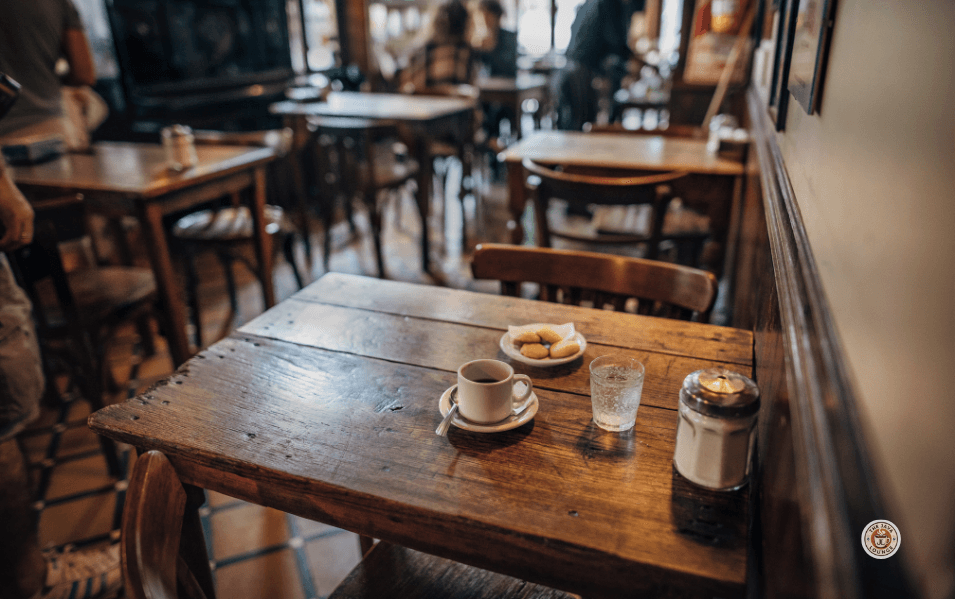
That’s why the best cozy cafe interiors don’t rely on one type of chair and table. They often combine window seats, small two-person tables, banquettes, communal tables, stools, or a few softer chairs.
Comfort isn’t just decorative.
One hospitality study found that seating comfort supported mental comfort and contributed to customers’ sense of hospitality.
The chair doesn’t need to feel like a recliner, but it should feel like the café expects people to stay longer than five minutes.

The Layout Feels Sheltered, Not Crowded
Cozy and cramped aren’t the same thing.
Tables placed too closely together can make people feel as though they’re sharing a conversation with the entire room.
On the other hand, a huge open floor with identical tables may feel more like a waiting area than a place to settle in.
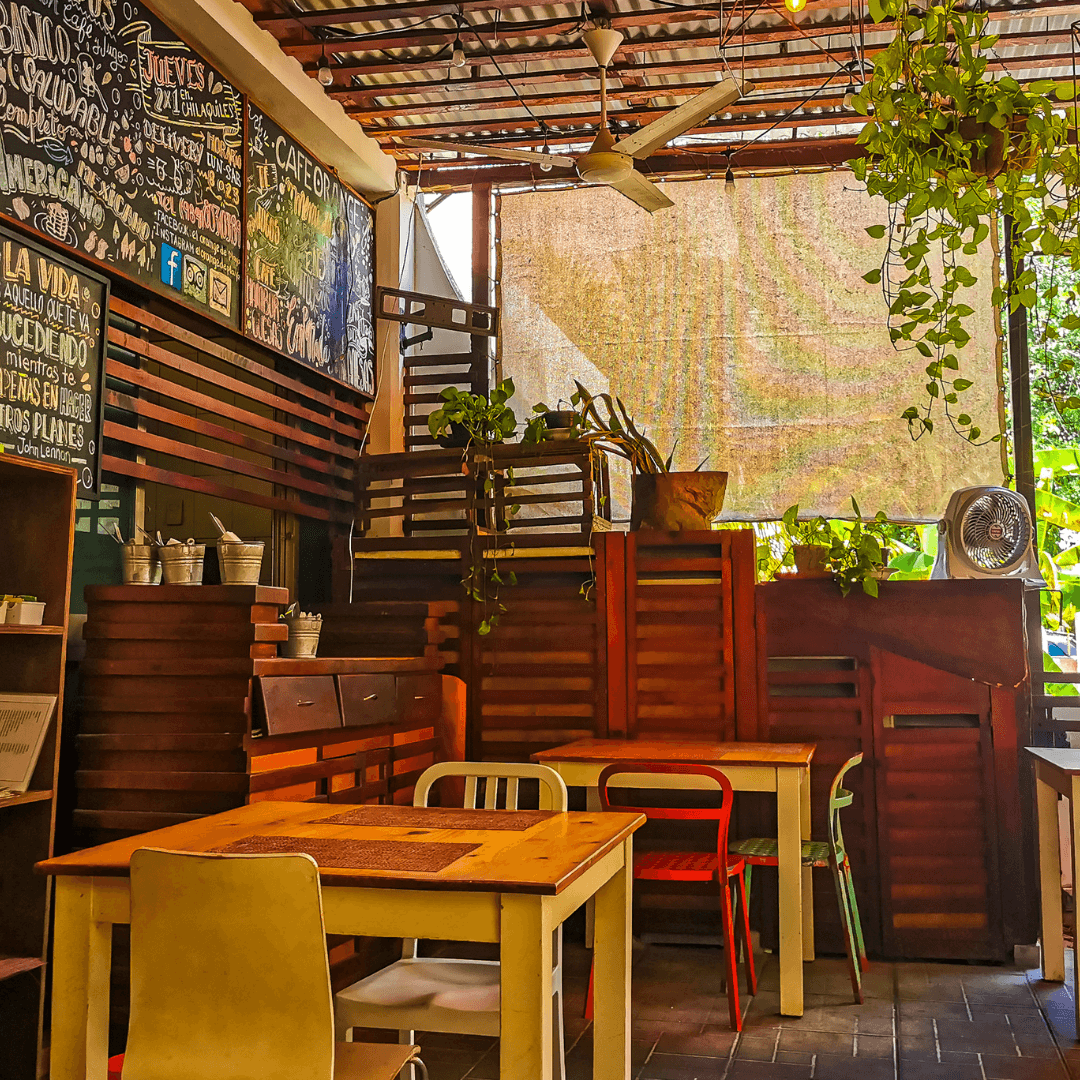
A welcoming layout creates smaller zones inside the larger room. A shelf can separate a quiet nook from the counter.
A banquette can make a wall feel useful.
Plants, rugs, changes in lighting, and different seating styles can help define one area without closing it off completely.
The result is a little privacy without isolation.
The Sound Level Lets the Room Feel Alive
A perfectly silent café can feel awkward. A very loud one can make a simple conversation feel like work.
Background music, the espresso machine, cups being set down, and low conversation all add to the atmosphere.
The problem starts when those sounds pile up and bounce around hard surfaces.
Research on conversation in noisy settings shows that people naturally move closer and speak louder as noise rises, but communication begins to break down when the background becomes too intense.
Soft materials can help take the edge off. Upholstered seating, curtains, acoustic panels, bookshelves, wood, and even a well-placed rug can make a room sound less sharp without turning it silent.
The Colors and Materials Have Some Warmth
A cozy coffee shop doesn’t have to be brown, dark, or rustic. Light, modern cafés can feel comfortable too.
What matters is that the materials don’t all feel cold or identical. Wood grain, brick, woven fabric, matte ceramics, leather, plaster, and soft upholstery add visual texture.
Even a mostly neutral room feels more interesting when the surfaces aren’t all glossy and perfectly matched.
Color can help set the pace. Warm neutrals, muted greens, deep blues, terracotta, cream, and charcoal are common choices because they’re easy to layer.
Brighter colors can still work, especially when they’re used with intention rather than scattered around the room.
The Décor Feels Collected Instead of Staged
There’s a difference between a café with personality and a café filled with objects chosen only to fit a trend.
Bookshelves, local art, handwritten signs, vintage pieces, plants, framed menus, and small displays can give the room a sense of place.
They work best when they connect to the café rather than looking like a checklist of “cozy” decorations.
Plants are especially useful because they soften hard edges and bring natural shapes into the room.
Reviews of indoor-plant research have found positive effects on people’s self-reported perceptions and emotions, although results depend on the setting and more research is still needed.
A café doesn’t need to become a greenhouse. One healthy plant on a shelf often looks better than ten struggling ones placed around the room for effect.
The Small Comfort Details Are Handled
The coziest spaces usually get the unglamorous details right.
The temperature is comfortable. The tables are clean. The chairs don’t wobble. The menu is easy to find.
The music fits the time of day. There’s somewhere sensible to wait without blocking the door or leaning over seated customers.
These details aren’t likely to appear in a café inspiration photo, but they shape the actual experience.
A room can have perfect pendant lights and beautiful furniture and still feel unwelcoming when it’s too cold, confusing, dirty, or difficult to move through.
A Quick Cozy-Café Checklist
A welcoming café usually has:
lighting that feels warm but isn’t too dim
more than one type of seating
enough space to feel comfortable
background sound that doesn’t overpower conversation
a mix of colors, materials, and textures
a few personal details that suit the space
clean, comfortable, easy-to-use surroundings
Not every cozy cafe needs a fireplace, a wall of books, or a row of velvet chairs. The feeling comes from balance.
The room has enough energy to feel social, enough comfort to make you stay, and enough personality to be remembered.
That’s what makes a café feel cozy and inviting: not one perfect decorating trick, but a collection of thoughtful details that work together.
Check these out

Cold Brew vs. Iced Coffee:
What’s the Difference?

The History of Coffee: From Ethiopia to the Modern Café

15 Café Drinks Explained for Beginners
What Makes a Cozy Cafe Feel Warm and Inviting?